

Annik senium
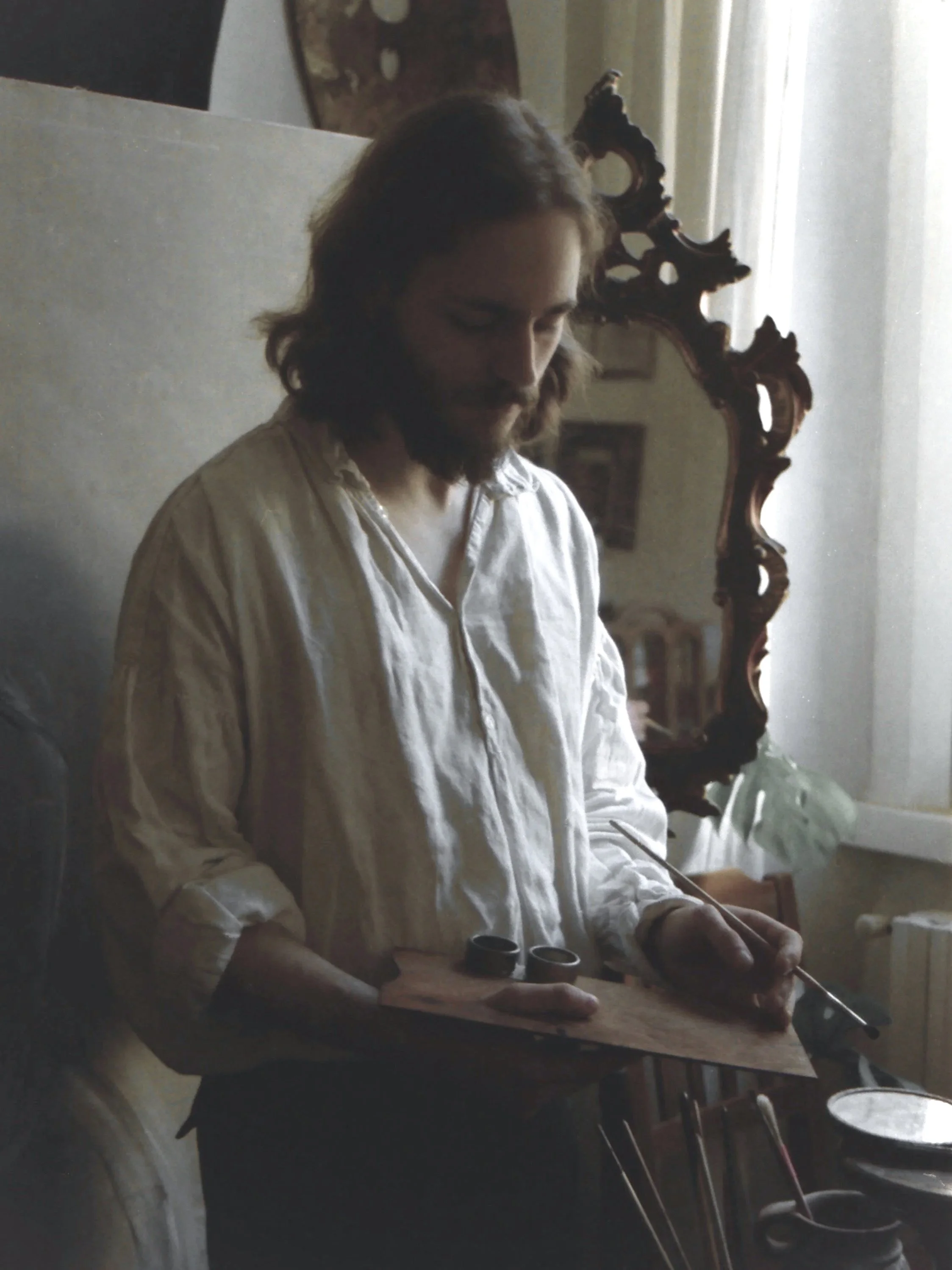
Photography by Irene Manco
b. 1998 in Germany
Jannik Senium is a german painter and craftsman creating works which aim to show quiet moments of introspection, transformation and melancholy, often told through the faces of figures out of myths and folklore.
Jannik grew up in the black forest of swabia. In contrast to the unique beauty and atmosphere of the surrounding nature stands the city of Pforzheim in which he was raised in. Once known for its goldsmithing and craftsmanship, it was almost entirely destroyed, left in ruins and quickly rebuilt after the second world war. This environment and lack of remaining connections to its past left him and many growing up there with a sense of unease and aimlessness.
It was in the neighbouring city during a school trip at the age of 14 in which he encountered works of art and craft for the first time, both of old and modern masters. It was one painting in particular, „the seven deadly sins (1933)“ by the painter Otto Dix, which has etched itself into his memory with its skilfully painted, grotesque and ghoulish figures and its use of strange symbolism and storytelling.
This encounter sparked a sudden and lasting curiosity about art and its purpose in our lifes and its quiet strength to express things most words can‘t reach.
After practicing drawing for many years in his adolescence and around the time of the worldwide Pandemic in 2020 he started to research, study and practice the techniques and materials of oil painting. Following two years of intensive self-teaching he left germany and sought out mentors and colleagues in Norway and Italy.
During his years living in Florence he developed his first body of work primarily focused on liminal atmospheres with figures of myths and folktales as well as his personal life, aiming to tell their stories removed from any specific time and place.
In autumn of 2025 he exhibited them in his first solo-exhibition called „AEON“ in palazzo Belllini.
Strongly inspired by the symbolist movement of the 19th century (Franz von Stuck, Klimt, Böcklin, Watts, Lepage) and technical influences from painters such as Rembrandt and Albrecht Dürer, he also draws heavily from poets such as Emily Dickinson and Rainer Maria Rilke.
He currently lives and works between Germany, Austria and Italy.